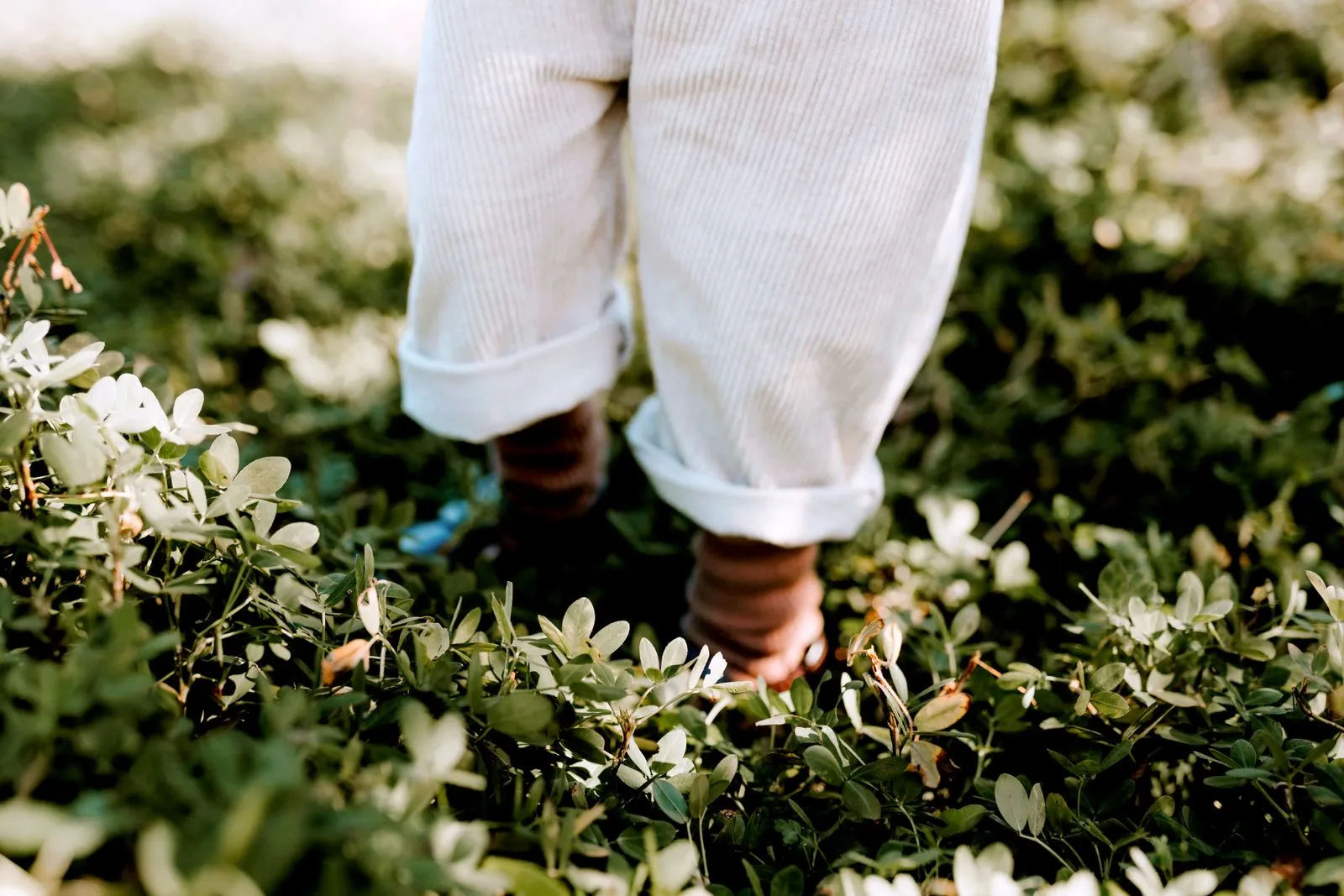
Children’s pants should stay in place, allow comfortable movement, and fall to a useful length. A quick fit check can reveal whether the size is right or a small alteration would help. Look at three areas: the waist, the seat, and the hem. Check the pants while your child stands, sits, and walks, since a pair that looks fine when standing may pinch, slip, or drag during everyday activity.
Check the Waist
The waistband should sit comfortably at the waist or where the pants are designed to rest. It should stay up without constant pulling, but it should not dig in, leave deep marks, or make sitting uncomfortable. Have your child sit and take a few steps. If the waistband shifts down or feels restrictive, check whether the pants have an adjustable elastic or button-tab waistband before considering alterations.
A belt can help with a slightly loose waist, but it may bunch the fabric or create discomfort under a shirt. If the pants fit well everywhere else but slide down, taking in the waistband may be an option. Avoid sizing down automatically: smaller pants may fit the waist while pulling across the seat or thighs.
Assess the Seat and Rise
The seat should lie smoothly without pulling across the hips or forming excess folds below the waistband. Ask your child to sit, bend, and squat. The fabric should allow these movements without pinching or exposing too much when your child bends. Tight horizontal lines, strained seams, or pockets that gape can indicate the pants are too snug through the seat.
Extra fabric can also affect comfort and appearance. A sagging seat or excess folds may mean the cut or size is too roomy. Check the rise—the distance from the waistband through the crotch—before deciding what to change. Altering the waist alone will not correct a rise that feels too long or short, and some ready-to-wear styles have limited room for adjustment.
Evaluate the Hem
Check the hem with the shoes your child is likely to wear with the pants. For many everyday styles, the hem should reach the top of the shoe or fall near the ankle without dragging on the ground. The exact length depends on the cut: cropped pants are meant to sit higher, while some straight-leg styles have a little more length.
Watch the hem as your child walks. Pants that drag can fray, collect dirt, or become a tripping hazard. A hem that rides high may expose too much ankle or restrict movement, depending on the style. If the waist and seat fit well but the legs are too long, hemming is often a straightforward adjustment. Check for a growing-room allowance before shortening pants that may be let down later.
Decide Whether to Alter
A useful fit check considers the whole pair, not just one measurement. Have your child wear the pants, fasten them as intended, and move naturally. Note whether the waist stays put, the seat allows bending and sitting, and the hem clears the floor. Also look for twisted seams, uneven leg lengths, or fabric that pulls when your child moves.
Alterations make sense when one area needs adjustment and the rest of the pants fit comfortably. If the waistband, seat, rise, and legs all feel wrong, a different size or style may be a better choice. For an appointment with Little Hem Detroit, bring the shoes your child will wear with the pants and point out any areas that feel tight, loose, or too long.
A comfortable pair should stay secure at the waist, move easily through the seat, and clear the ground at the hem. Check the fit while your child sits and walks before choosing an alteration. If one area needs a small adjustment, consult a children’s clothing alteration tailor about what the garment can accommodate.